
Hard Water Plumbing Problems in Martinsburg, WV: How to Protect Your Home
Martinsburg’s limestone and karst landscape can contribute calcium and magnesium to local groundwater, but
the hardness reaching your home depends on your water source and property. That is why testing, not guessing, is the first step in protecting your plumbing.
As water moves through soil and rock, it can pick up naturally occurring minerals before reaching a spring, well, or municipal water source. USGS research on Berkeley County’s groundwater and carbonate-rock geology confirms that much of the county is underlain by carbonate rock and includes karst terrain.
At The Plumbing Trust, hard water is one of the most common water-quality problems we encounter in the Martinsburg area. Mineral buildup may begin as a few white spots around a faucet, but it can eventually affect fixture flow, water-heater performance, appliance connections, and day-to-day water use.
What Hard Water Does to Your Plumbing
Hard water leaves mineral deposits, known as scale, on surfaces that regularly contact water. This buildup is especially likely where water is heated or passes through small openings.
The most common hard water plumbing problems include:
- White or chalky residue around faucets
- Clogged showerhead openings and faucet aerators
- Reduced flow through small valves and fixture cartridges
- Spots or film on dishes and shower doors
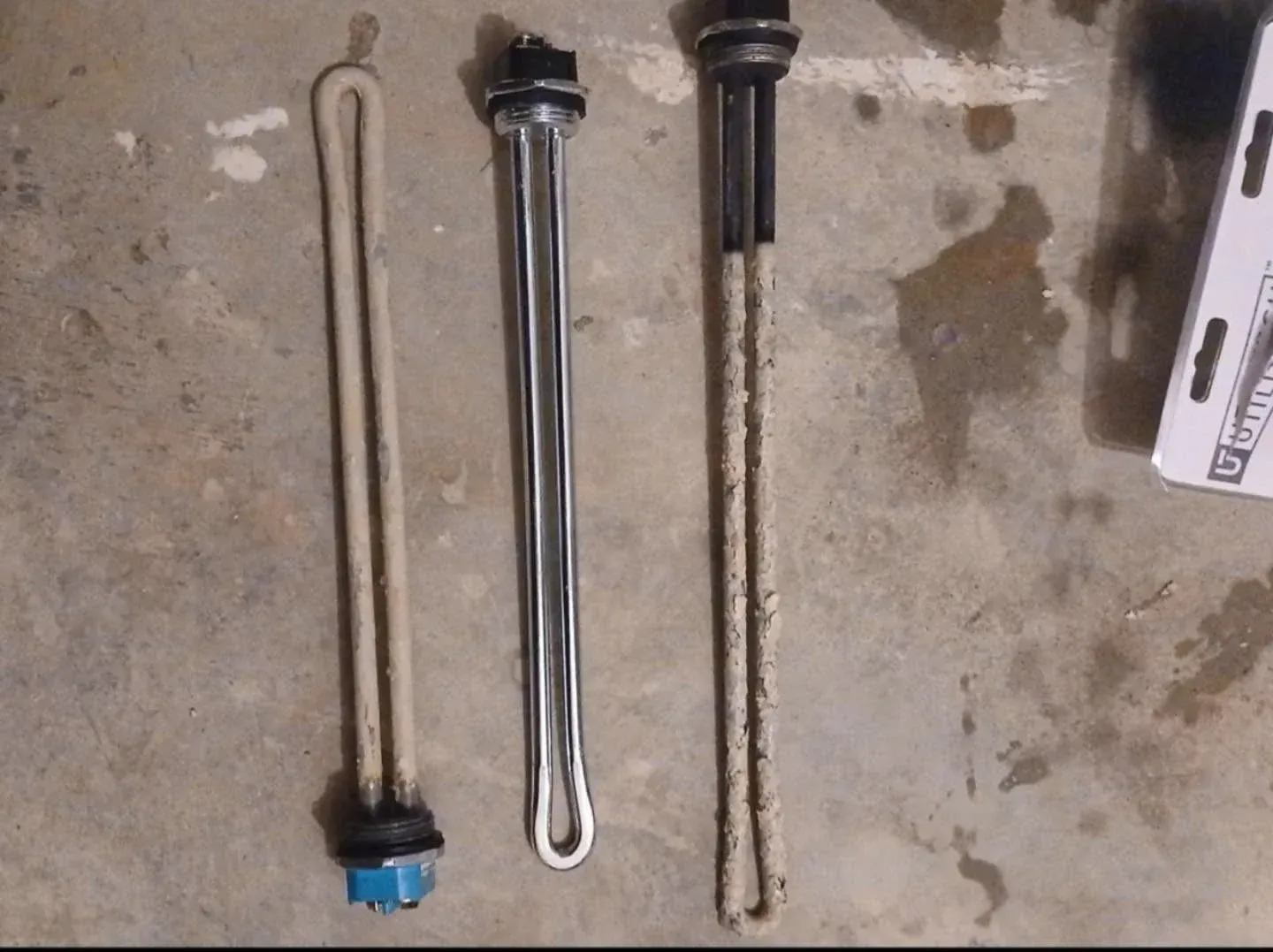
- Scale inside tank and tankless water heaters
- Soaps and detergents that do not lather or rinse well
- Buildup inside appliance supply lines and connections
- More frequent fixture cleaning and maintenance
The USGS explains that heating hard water can create calcium carbonate deposits. Over time, scale can restrict plumbing passages, reduce equipment performance, and increase maintenance needs.
Hard water damage usually develops slowly. You may not notice a major change from one day to the next, but months or years of buildup can make fixtures and hot-water equipment work harder than they should. For more signs to watch for, read our article on
how hard water damages your plumbing system.
How to Tell if Your Water Is Hard
A water test is the only dependable way to measure hardness. White residue and spotted dishes are useful clues, but similar symptoms may also come from sediment, iron, high total dissolved solids, or other water conditions.
The USGS uses the following general hardness classifications:
| Hardness as Calcium Carbonate | Classification | What You May Notice |
|---|---|---|
| 0–60 mg/L | Soft | Little visible scale |
| 61–120 mg/L | Moderately hard | Some spotting and buildup |
| 121–180 mg/L | Hard | Regular scale on fixtures |
| More than 180 mg/L | Very hard | Faster or heavier mineral buildup |
A hardness result may also be given in grains per gallon. One grain per gallon equals approximately 17.1 mg/L.
Consider testing your water when:
- You move into a new home.
- Scale returns quickly after cleaning.
- Hot-water flow or performance changes.
- You are planning to buy a water softener.
- Your home uses a private well.
- You notice staining, sediment, odors, or an unusual taste.
- Several fixtures develop low flow at the same time.
Testing before choosing equipment can prevent you from paying for a system that does not address the actual problem.
What Martinsburg’s 2026 Consumer Confidence Report Shows
Martinsburg’s current water report does not publish a citywide hardness measurement, so homeowners should avoid assuming that every property in Martinsburg has the same hardness level.
The city’s 2026 Consumer Confidence Report covering the calendar year 2025 identifies Big Spring and Kilmer Spring as water sources. It also provides results for regulated contaminants, disinfection byproducts, lead and copper monitoring, turbidity, and other water-quality measures.
The report explains that water can dissolve naturally occurring minerals as it moves across land or through the ground. However, because hardness is not listed in the report, it cannot support a specific grains-per-gallon claim for every Martinsburg home.
Municipal reports also cannot account for every condition inside an individual property. Water can interact with service lines, older plumbing materials, fixtures, and water heaters after entering the home. Private wells may have different water-quality concerns from homes connected to city water.
For those reasons,
a property-specific test is more useful than a broad regional estimate when selecting water-treatment equipment.
How to Protect Your Plumbing From Hard Water
The best protection plan combines
water testing, correctly selected treatment, and routine plumbing maintenance. You do not need every available system, only the equipment that addresses your test results.
1. Test Before Buying Equipment
Start by measuring hardness. Depending on the home, the test may also need to cover:
- Iron and manganese
- pH
- Sediment
- Chlorine
- Lead
- Bacteria
- Total dissolved solids
- Sulfur-related odors
- Other contaminants of concern
The Plumbing Trust provides
water treatment services in Martinsburg for both city water and well-water homes. Our process begins by identifying the problem before recommending equipment.
2. Install a Properly Sized Water Softener
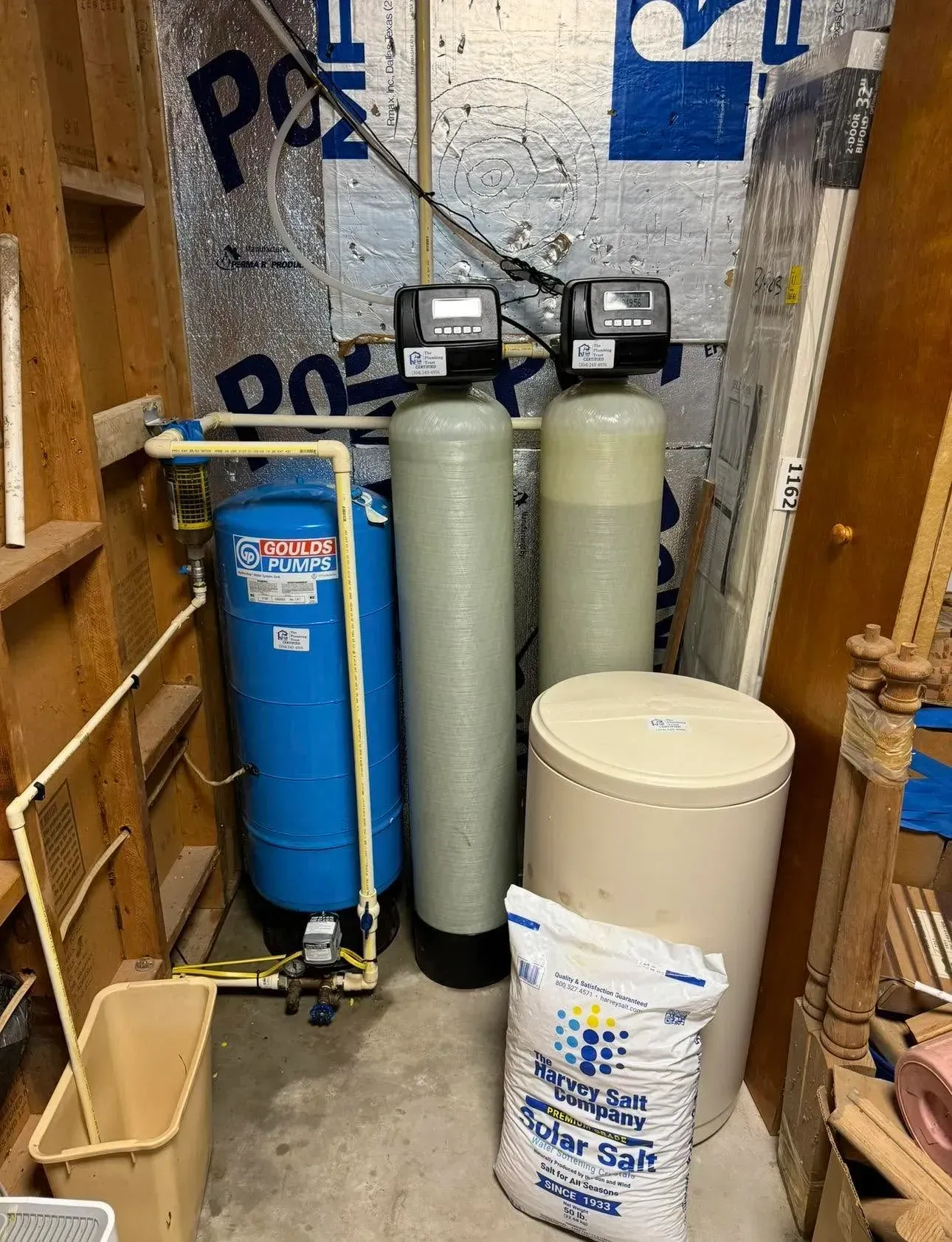
A water softener reduces calcium and magnesium, the main minerals responsible for hardness. Correct sizing depends on the water’s hardness, household water use, number of occupants, and equipment capacity.
The Department of Energy’s water-softener guidance explains that softening can help prevent mineral deposits and scale buildup that contribute to clogged plumbing and damage to water-using appliances.
A system that is too small may regenerate too often or fail to provide consistent soft water. An oversized or poorly adjusted system can waste salt and water.
3. Use Filtration Only for Tested Concerns
A softener does not remove every substance from water. It is designed primarily to reduce hardness minerals.
Depending on test results, a home may also benefit from:
- Sediment filtration
- Activated carbon filtration
- Iron or manganese treatment
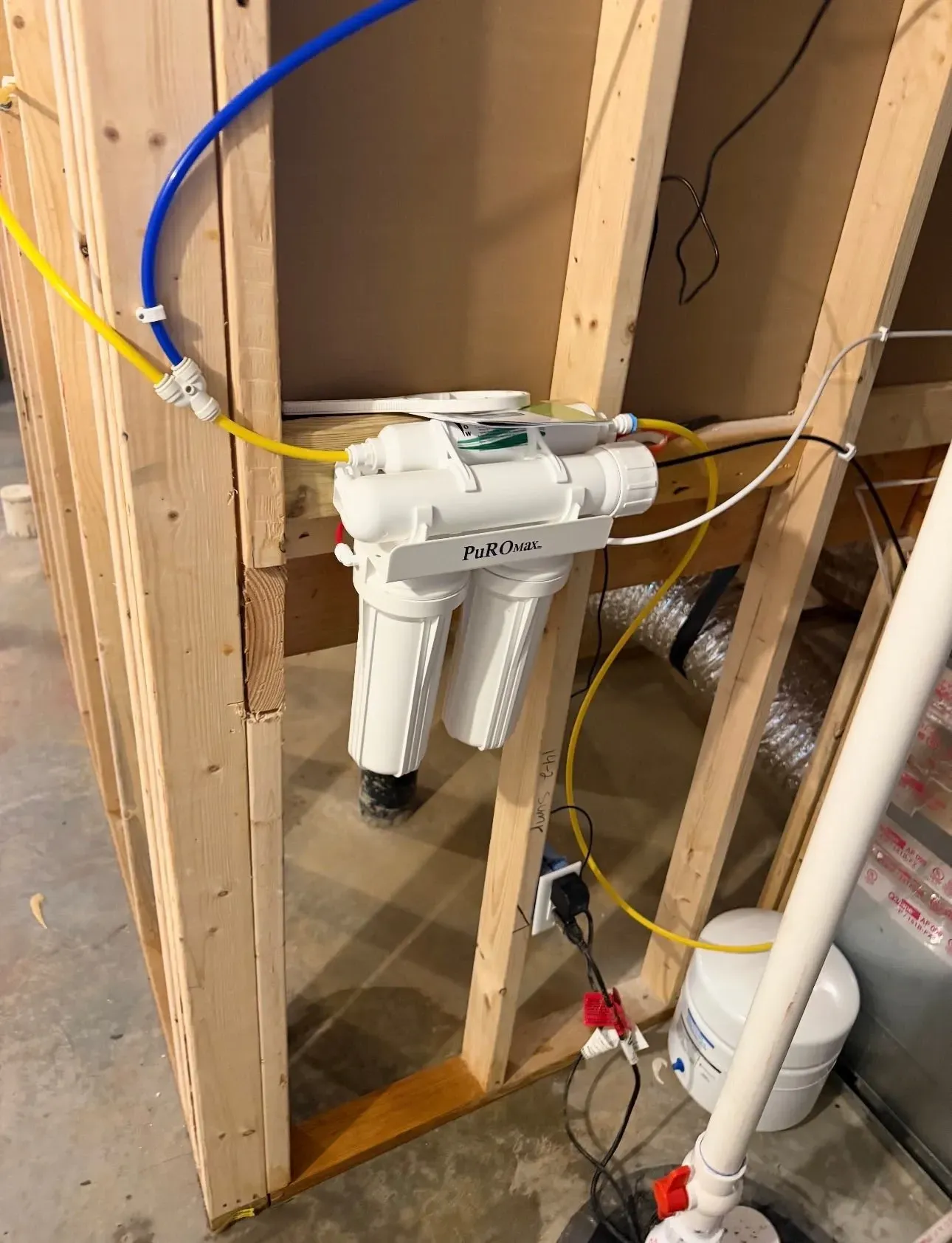
- Reverse osmosis at a drinking-water tap
- Ultraviolet treatment for certain well-water concerns
- Specialized equipment for specific contaminants
Certification claims may apply only to specific PFAS, so review the product’s performance sheet and replace filters on schedule.
Learn more about
how water treatment systems improve your home’s water quality.
4. Maintain Your Water Heater
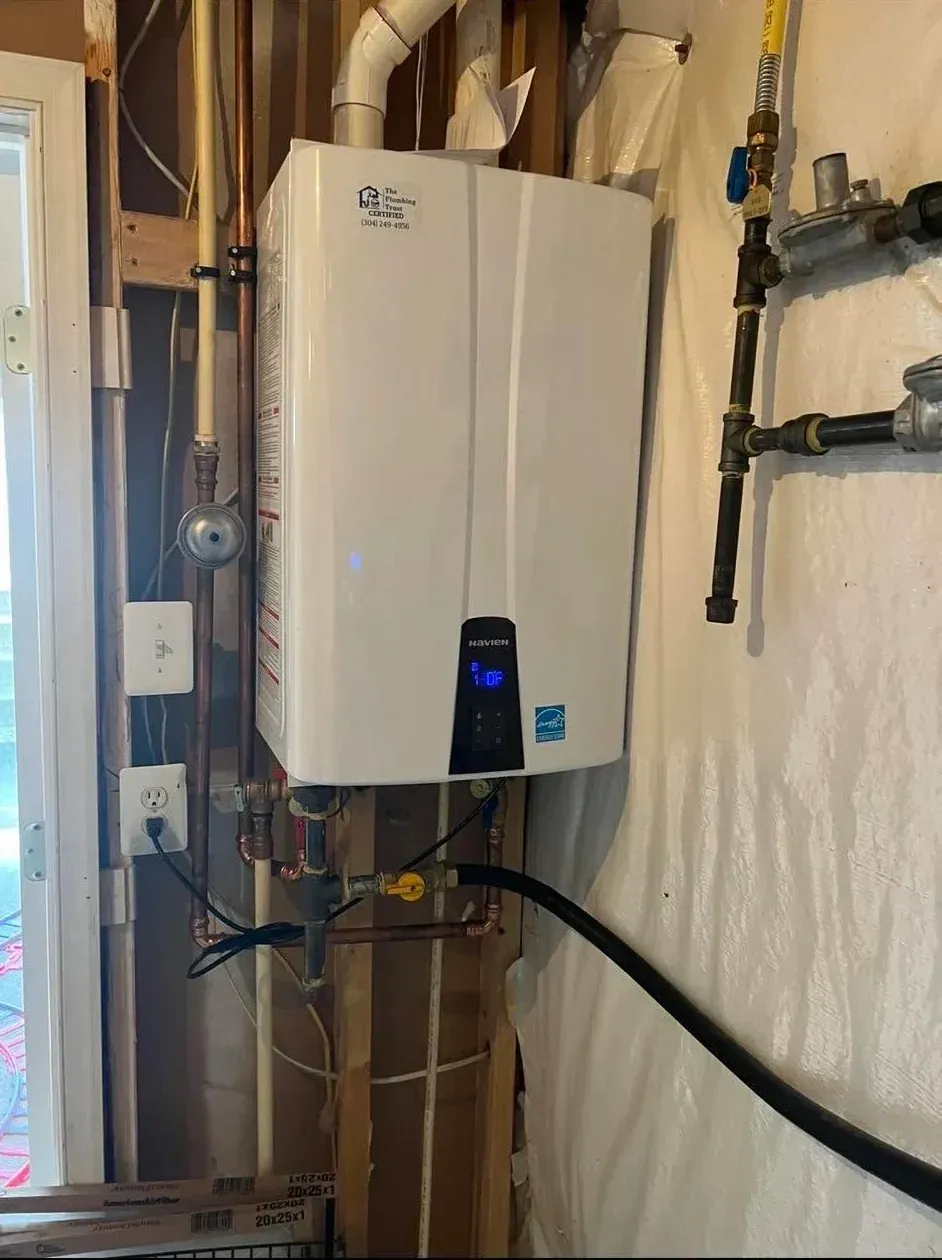
Tank and tankless water heaters can both develop scale. Neither type is immune to mineral buildup.
Watch for:
- Popping or rumbling from a tank
- Longer recovery times
- Inconsistent water temperature
- Reduced hot-water flow
- Sediment during tank draining
- Tankless water-heater error codes
- Rising energy use without another clear cause
Follow the manufacturer’s flushing or descaling instructions. Homes with confirmed hard water may need service more frequently than homes with soft water.
5. Clean Fixtures and Repair Leaks
Remove and clean faucet aerators and showerheads when flow begins to drop. Check shutoff valves, appliance hoses, toilets, and connections for moisture or corrosion.
Hard water does not cause every leak, but mineral deposits can hide early fixture problems or interfere with small moving components. According to the EPA’s current household leak statistics, an average family can waste about 9,400 gallons of water annually through household leaks.
For leaking fixtures, low water pressure, water-heater concerns, or damaged plumbing, schedule
general plumbing service.
Which Water-Treatment System Do You Need?
The right system depends on what the water test finds. A water softener, whole-home filter, and reverse osmosis unit perform different jobs.
| System | Main Purpose | Typical Location | Reduces Hardness? |
|---|---|---|---|
| Water softener | Reduces calcium and magnesium | Main water line | Yes |
| Sediment filter | Captures sand, rust, and particles | Main water line | No |
| Activated carbon filter | Addresses certain tastes, odors, chlorine, and selected contaminants | Main line or one faucet | No |
| Reverse osmosis | Reduces many dissolved substances in drinking water | Usually under a sink | Yes, at the treated tap; not normally throughout the home |
| Combined treatment system | Addresses several confirmed water problems | Depends on system design | Depends on the equipment |
Avoid choosing a system from appearance alone:
- White scale often points to hardness.
- Orange or brown staining may indicate iron.
- Black staining may involve manganese.
- Rotten-egg odors may involve sulfur compounds or bacteria.
- Cloudy water may come from sediment, minerals, or trapped air.
A professional evaluation can help separate water-quality problems from plumbing problems.
When Should You Call a Plumber?
Call a plumber when scale appears alongside declining flow, water-heater trouble, leaking fittings, or repeated fixture failures. Early service can identify whether the problem comes from hardness, pressure, sediment, corrosion, or aging equipment.
Arrange an inspection when:
- Several fixtures have low flow.
- Scale returns shortly after cleaning.
- Your water heater makes unusual sounds.
- Hot-water performance has declined.
- A tankless unit needs professional descaling.
- Valves or fixture cartridges keep failing.
- You see corrosion or moisture around connections.
- You need help interpreting water-test results.
- You are comparing softeners or filtration systems.
A qualified
plumbing contractor can evaluate the plumbing and water-treatment equipment together instead of treating one symptom at a time.
Protect Your Martinsburg Home Before Scale Becomes a Repair
Do not choose a softener or filtration system based on white residue alone. Schedule a water-quality and plumbing inspection with The Plumbing Trust to identify the actual problem and choose equipment that fits your home, water source, and budget.
The Plumbing Trust is locally based in Martinsburg and serves homeowners throughout the Eastern Panhandle of West Virginia. Call
(304) 249-4956 to schedule your inspection and take the guesswork out of protecting your plumbing.
FAQs About Hard Water Problems
Is hard water unsafe to drink?
Hardness itself is generally considered a nuisance rather than a health hazard. However, a hardness test does not tell you whether other contaminants are present, so additional testing may be appropriate for private wells or homes with unusual water symptoms.
Can hard water clog plumbing pipes?
Scale can restrict small plumbing openings, including aerators, showerheads, valves, fixture cartridges, and water-heater components. Serious blockage inside larger supply pipes is less common, but long-term mineral buildup can still reduce performance.
Is a water softener enough for every home?
No. A softener reduces hardness minerals but does not solve every sediment, taste, odor, bacteria, metal, or chemical concern. Select additional filtration only when testing shows that it is needed.
Do tankless water heaters develop hard water scale?
Yes. Scale can collect inside a tankless unit’s heat exchanger and reduce water flow or heating performance. Tankless heaters still need proper water treatment and scheduled descaling.
How often should a water heater be flushed or descaled?
The correct schedule depends on the heater manufacturer, water hardness, water use, and equipment condition. Follow the manufacturer’s instructions and ask a plumber whether confirmed hard water calls for more frequent maintenance.
SHARE THIS ARTICLE
RECENT BLOGS